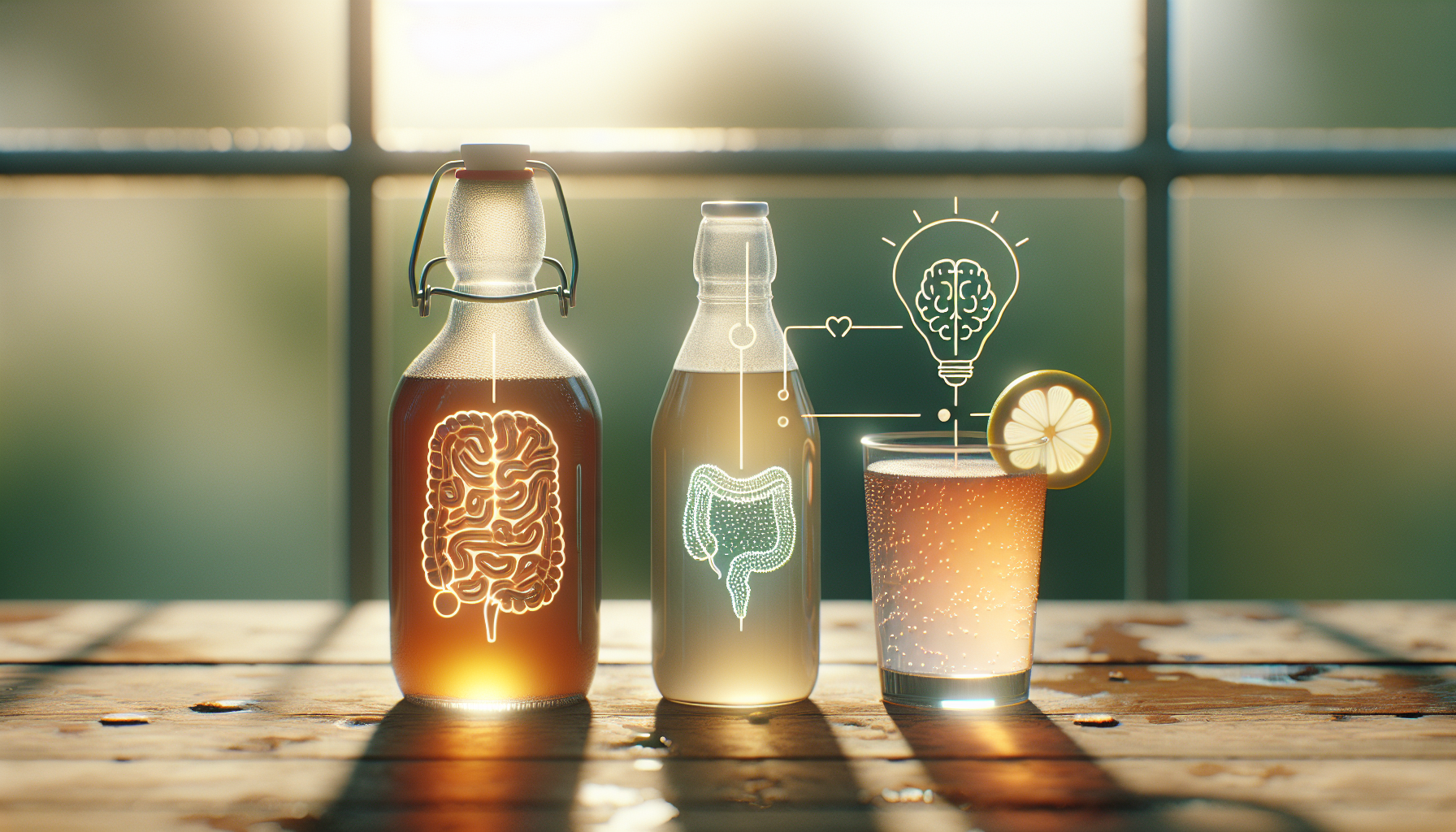
Fermented Beverages for Mental Health: Kombucha, Kefir, and the Science-Backed Way to Support Mood and Stress
The fermented beverage aisle at your local grocery store has exploded in recent years. Kombucha sales have surged into a multi-billion dollar industry, and kefir has moved from health food obscurity to mainstream refrigerator staple. But here's what makes this trend particularly fascinating: it's happening alongside groundbreaking microbiome research revealing that roughly 90% of your body's serotonin—that crucial mood-regulating neurotransmitter—is produced in your gut, not your brain.
This isn't coincidence. People are increasingly curious about the connection between what they drink, how their gut feels, and how their mind responds.
Fermented beverages like kombucha and kefir may support mental health through what scientists call the gut–brain axis. These living drinks work by modulating your gut microbiota, reducing inflammation, and influencing neurotransmitter production. The evidence comes from human trials, animal studies, and systematic reviews—and while it's not a miracle cure, the science is genuinely promising. Throughout this guide, you'll get a balanced evidence summary, strain-specific insights into beneficial bacteria like Lactobacillus and Bifidobacterium, practical product selection tips, easy homemade recipes for kombucha, milk kefir, and water kefir, appropriate serving sizes, and guidance on integrating these drinks into a mood-supporting lifestyle.
We're living through what some researchers call an anxiety and depression epidemic, and that's driving intense interest in psychobiotics—specific probiotic strains that may benefit mental health. Let's explore what the science actually says and how you can apply it practically.
What Are Fermented Beverages? A Quick Primer
At their core, fermented beverages are drinks produced when microorganisms transform sugars or lactose through fermentation. This ancient process yields something remarkable: live cultures (probiotics), organic acids, enzymes, and metabolites including short-chain fatty acids like butyrate, acetate, and propionate. These compounds do far more than create interesting flavors—they actively interact with your body's systems.
The Most Common Types
Kombucha starts as sweetened tea that's fermented using a SCOBY—a symbiotic culture of bacteria and yeast that looks like a rubbery pancake floating on the liquid's surface. This fermentation creates a complex ecosystem containing acetic acid bacteria, lactic acid bacteria including Lactobacillus strains, and beneficial yeasts like Saccharomyces boulardii. The finished drink contains kefiran, polyphenols from the tea base, and typically between 0.5% and 3% ethanol. The tangy, slightly vinegary taste comes from the organic acids produced during fermentation.
Milk kefir uses a different approach. Kefir grains—which aren't actually grains but rather a polysaccharide matrix housing dozens of microorganisms—ferment dairy milk over about 24 hours. These grains contain Lactobacillus kefiranofaciens, Lactococcus, Leuconostoc, and various yeasts working in harmony. The result is a tangy, drinkable yogurt-like beverage rich in B-vitamins, calcium, vitamin K2, exopolysaccharides, and bacteriocins. With over 50 potential strains, milk kefir offers remarkable microbial diversity.
Water kefir, sometimes called tibicos, provides a dairy-free alternative. Using tibicos grains in a sugar-water base, this fermentation relies on Lactobacillus casei, Bifidobacterium, and various yeasts to create a lightly effervescent, subtly sweet beverage. It's naturally lactose-free and works well with fruit sugars or plain sucrose.
Beyond these main categories, you'll find jun (a honey-based kombucha variant using green tea), kvass (traditionally made from beets or rye bread with lactic acid bacteria), tepache (fermented pineapple rind containing Lactobacillus plantarum), and probiotic sodas (essentially low-sugar water kefir variants marketed as healthier soft drink alternatives).
Understanding the Fermentation Process
Primary fermentation typically runs 7 to 14 days, during which microorganisms multiply and produce acids that preserve the drink and create its distinctive taste. Second fermentation—an optional step where you add flavorings and seal the bottles—generates carbonation and allows for creative additions like ginger, fruit, or herbs.
It's worth understanding the terminology: probiotics are living microorganisms that confer health benefits (often measured in CFU or colony-forming units, with effective counts around 10^9 CFU). Prebiotics are fiber compounds that feed beneficial bacteria. Postbiotics are the metabolic byproducts of fermentation—like butyrate and acetate—that provide their own distinct benefits.
When evaluating fermented beverages for gut health, scientists look at metrics like microbiota diversity (measured through alpha and beta diversity indices), CFU counts, and strain-specific effects. Different strains do different things, which is why a beverage containing Lactobacillus rhamnosus might have different mood effects than one dominated by other species.
How Fermented Drinks Can Affect the Brain: The Gut–Brain Mechanisms
The gut–brain axis sounds like science fiction, but it's very real biology. This bidirectional communication highway connects your gut microbiota to your brain through the vagus nerve—the longest cranial nerve in your body, running from your brainstem down through your chest and into your abdomen. Your enteric nervous system, sometimes called your "second brain," contains hundreds of millions of neurons and produces roughly 90% of your body's serotonin along with GABA and influences the tryptophan-kynurenine pathway.
How Your Microbiome Shapes Your Mood
Neurotransmitter production happens partly in your gut, and specific bacteria play starring roles. Lactobacillus helveticus and Bifidobacterium longum have been shown to boost serotonin production from the amino acid tryptophan. Saccharomyces boulardii aids in GABA production. When you drink fermented beverages containing these organisms, you're potentially supporting your gut's neurotransmitter factory.
Short-chain fatty acids and inflammation represent another crucial pathway. When bacteria ferment fiber and other compounds, they produce SCFAs like butyrate. This particular fatty acid is powerfully anti-inflammatory, strengthens your intestinal barrier (reducing so-called "leaky gut"), and helps lower inflammatory cytokines including IL-6 and CRP. Since chronic inflammation is increasingly linked to depression and anxiety, reducing it through dietary means offers a promising intervention point. Fermented beverages may also help modulate cortisol, your primary stress hormone.
Vagus nerve signaling provides perhaps the most direct gut-brain connection. Research on Lactobacillus strains shows they can influence vagal tone—essentially how well your vagus nerve communicates with your brain. Better vagal tone is associated with enhanced stress resilience. Animal studies have demonstrated direct messaging from gut bacteria to brain regions, with the vagus nerve serving as the primary telephone line.
Immune and metabolic pathways round out the picture. By reducing systemic inflammation and supporting microbiota diversity, fermented beverages may contribute to improved cognitive function, better sleep, and enhanced cognitive clarity. These aren't separate effects—they're interconnected through the complex web of gut-brain communication.
What the Science Says: Evidence for Mental Health Benefits
Let's be honest about where the research stands. The evidence supporting fermented beverages for mental health is promising but not yet definitive. Understanding the nuances helps you make informed decisions.
Human Clinical Trials
Randomized controlled trials—the gold standard of medical research—have produced intriguing results, though typically with small sample sizes. Studies using fermented milk products similar to kefir have shown changes in brain activity within emotion-processing regions. Other research found that high-neuroticism individuals who consumed fermented foods reported reduced social anxiety. Students with existing mental health conditions noted fewer depression symptoms after increasing their fermented food intake.
Observational Studies
Population studies linking diet to mental health show mixed results. High fermented food intake correlates with lower anxiety and depression in some studies, potentially through Lactobacillus-mediated immune calibration. However, one study of healthy students under academic stress found that those consuming more fermented foods actually reported more symptoms—a reminder that context matters and that fermented foods aren't universally beneficial in every situation.
Animal and Mechanistic Research
Animal studies provide crucial mechanistic insights. Research shows that mice lacking certain Lactobacillus strains exhibit worse anxiety and depression-like behaviors. Scientists have demonstrated causal links between specific gut bacteria and brain function through the vagus nerve. While we can't directly apply animal findings to humans, these studies help explain how fermented beverages might work.
Systematic Reviews and Meta-Analyses
Comprehensive reviews of psychobiotic research conclude that strain-specific probiotics can alleviate depressive and anxiety symptoms. Long-term studies suggest that regular consumption of fermented foods may slow cognitive decline in elderly populations through neuroprotective effects of SCFAs, potentially reducing dementia risk.
The Important Caveats
Here's the balanced take: evidence for fermented beverages specifically (as opposed to probiotic supplements) remains promising but methodologically limited. Studies tend to be small, strain variability between products is enormous, and no human research has established definitive causality. Fermented drinks are not a cure for depression or anxiety and should never replace professional treatment. Think of them as a potential adjunct to therapy, medication when prescribed, and overall healthy dietary patterns.
When choosing products or strains, the research suggests prioritizing those containing Lactobacillus plantarum and Bifidobacterium species, which have the strongest evidence base for mood-related effects.
Kombucha vs. Kefir vs. Other Fermented Drinks: A Practical Comparison
Choosing the right fermented beverage depends on your goals, dietary restrictions, and taste preferences. Here's how the main options stack up:
Kombucha contains acetic acid bacteria, Saccharomyces yeasts, and Gluconacetobacter among its key strains. You'll get polyphenols from the tea base, B-vitamins, and acetate as primary metabolites, though CFU counts tend to be lower than kefir (typically 10^6 to 10^8). A standard 8-ounce serving contains 2 to 5 grams of sugar and 0.5% to 2% ethanol. Kombucha works particularly well for those seeking stress relief and antioxidant benefits.
Milk kefir offers substantially more microbial diversity, with over 50 strains possible including Lactobacillus kefiri, Lactococcus, and various yeasts. It's rich in calcium, vitamin K2, and kefiran (a unique polysaccharide), with higher CFU counts often exceeding 10^9. Sugar content runs 4 to 7 grams per serving (from remaining lactose), with less than 0.5% alcohol. This is your best choice for comprehensive mood support and bone health, though it's not suitable for those avoiding lactose.
Water kefir provides a dairy-free middle ground with Lactobacillus casei, Bifidobacterium, and Leuconostoc among its key strains. It delivers exopolysaccharides and vitamins while remaining lactose-free. Sugar content ranges from 3 to 6 grams with only trace ethanol. Water kefir suits those seeking anxiety relief while following vegan or dairy-free diets.
Jun, kvass, and tepache offer varied lactic acid bacteria profiles (tepache, for instance, is rich in Lactobacillus plantarum). These options provide fiber and postbiotics with generally low to moderate sugar content. They're excellent for adding microbial diversity to your routine and often work well for those seeking low-sugar options.
If you have FODMAP sensitivities or SIBO, be thoughtful about high-ferment options. Dairy versus non-dairy considerations extend beyond lactose—the protein and fat content of milk kefir may affect digestibility differently than water-based ferments.
Choosing Store-Bought Options: Your Label Reading Guide
Walking into the fermented beverage section can feel overwhelming. These guidelines help you identify quality products.
What to Look For
Seek out products labeled as unpasteurized with specific mentions of live SCOBY or kefir grains in the brewing process. Better products list specific strains—seeing Lactobacillus rhamnosus or Bifidobacterium longum on a label indicates more thoughtful formulation than vague "probiotic cultures." Look for CFU counts exceeding 10^8, sugar content under 4 grams per serving, alcohol content below 0.5%, and no preservatives (which can kill beneficial organisms).
Red Flags to Avoid
Pasteurized products contain no live cultures—the heat treatment kills them. Labels claiming generic "probiotic" benefits without specifics often indicate marketing over substance. High sugar content (over 7 grams per serving) undermines potential benefits and may indicate insufficient fermentation. If you have histamine intolerance, be especially careful as fermented foods naturally contain histamine.
Product Selection by Goal
For mood support specifically, prioritize high-Bifidobacterium kefir products. If you're watching sugar intake, look for probiotic sodas or second-ferment kombucha varieties that have converted more sugar to acids. For dairy-free options, water kefir and tepache brands offer excellent alternatives. Beginners often do best starting with low-alcohol kombucha, which tends to have milder flavor and predictable effects.
DIY Fermentation: Easy Recipes and Starter Tips
Making your own fermented beverages gives you control over ingredients, sugar content, and fermentation time. It's also remarkably satisfying and considerably cheaper than store-bought options.
Before You Begin: Sanitation Essentials
Successful fermentation depends on good hygiene. Sterilize your fermentation vessel (glass jars work best) with boiling water or sanitizing solution. Clean all utensils thoroughly. You'll need a starter culture kit—either a SCOBY for kombucha or grains for kefir. These are available online, from fermentation supply shops, or often free from friends who brew their own.
Homemade Kombucha Recipe
This recipe makes one gallon and takes 7 to 10 days.
Start by boiling one gallon of filtered water and steeping 4 to 6 bags of black or green tea (or 2 tablespoons loose leaf) for about 10 minutes. Stir in one cup of plain white sugar until dissolved—don't worry, the sugar feeds the SCOBY, not you. Let the sweet tea cool completely to room temperature; heat kills the beneficial organisms.
Transfer the cooled tea to your fermentation vessel and add your SCOBY along with one cup of starter tea from a previous batch or store-bought unflavored kombucha. Cover with a tight-weave cloth secured with a rubber band—this allows airflow while keeping out fruit flies and debris.
Let it ferment at room temperature (68°F to 85°F) for 7 to 10 days. Taste it starting around day 5. It should develop a pleasant tanginess—too sweet means it needs more time, while an overwhelming vinegar taste indicates overfermentation. A new SCOBY will form on the surface; this is normal and desirable.
For second fermentation and carbonation, transfer the kombucha to bottles, leaving about an inch of headspace. Add flavorings like fresh ginger, fruit juice, or berries. Seal tightly and leave at room temperature for 2 to 3 days, "burping" the bottles daily to release excess pressure. Refrigerate to stop fermentation and chill before drinking. The finished kombucha keeps for about a month refrigerated.
Milk Kefir Recipe
This recipe makes one quart and takes about 24 hours.
Place 1 to 2 tablespoons of kefir grains in a clean quart jar. Pour in whole milk (dairy works best, though non-dairy alternatives can work with some adjustments), leaving about an inch of headspace. Cover loosely with a lid or cloth and let ferment at room temperature for 24 hours. The milk will thicken and develop a tangy, slightly yeasty aroma.
Strain through a plastic or stainless steel strainer (avoid aluminum, which can damage grains) to separate the grains from the finished kefir. The grains go back into fresh milk for the next batch—they'll continue producing indefinitely with proper care. Refrigerate the finished kefir and enjoy within one to two weeks.
Water Kefir Recipe
This recipe makes one quart and takes 24 to 48 hours.
Dissolve one-quarter cup of sugar in one quart of warm filtered water. Let cool to room temperature, then add your tibicos grains. You can add a small piece of unsulfured dried fruit (like a fig or date) and a pinch of mineral salt for added nutrients
Leave a Reply